
Land use and land use change in the SSPs-CH 
Possible land use in the SSPs-CH 
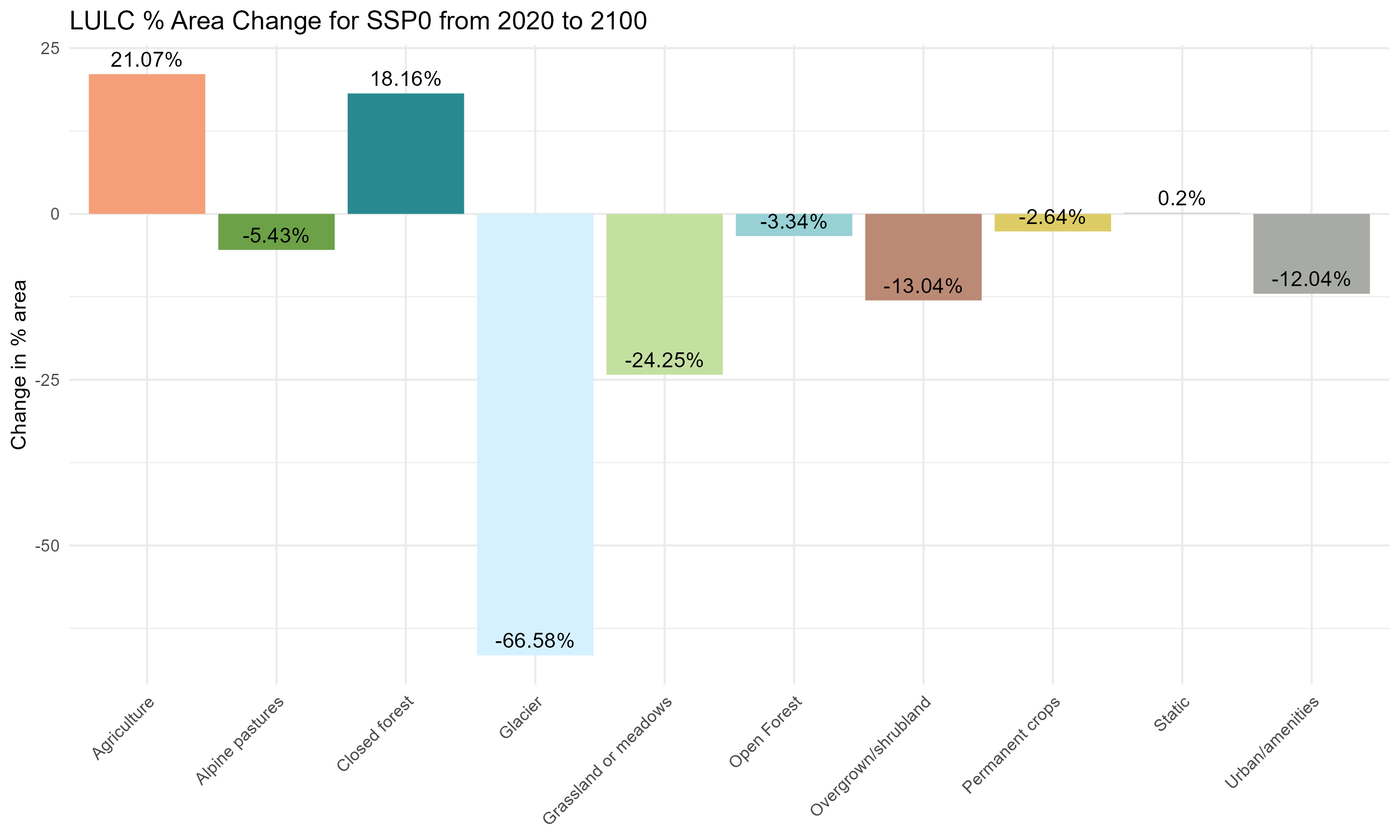
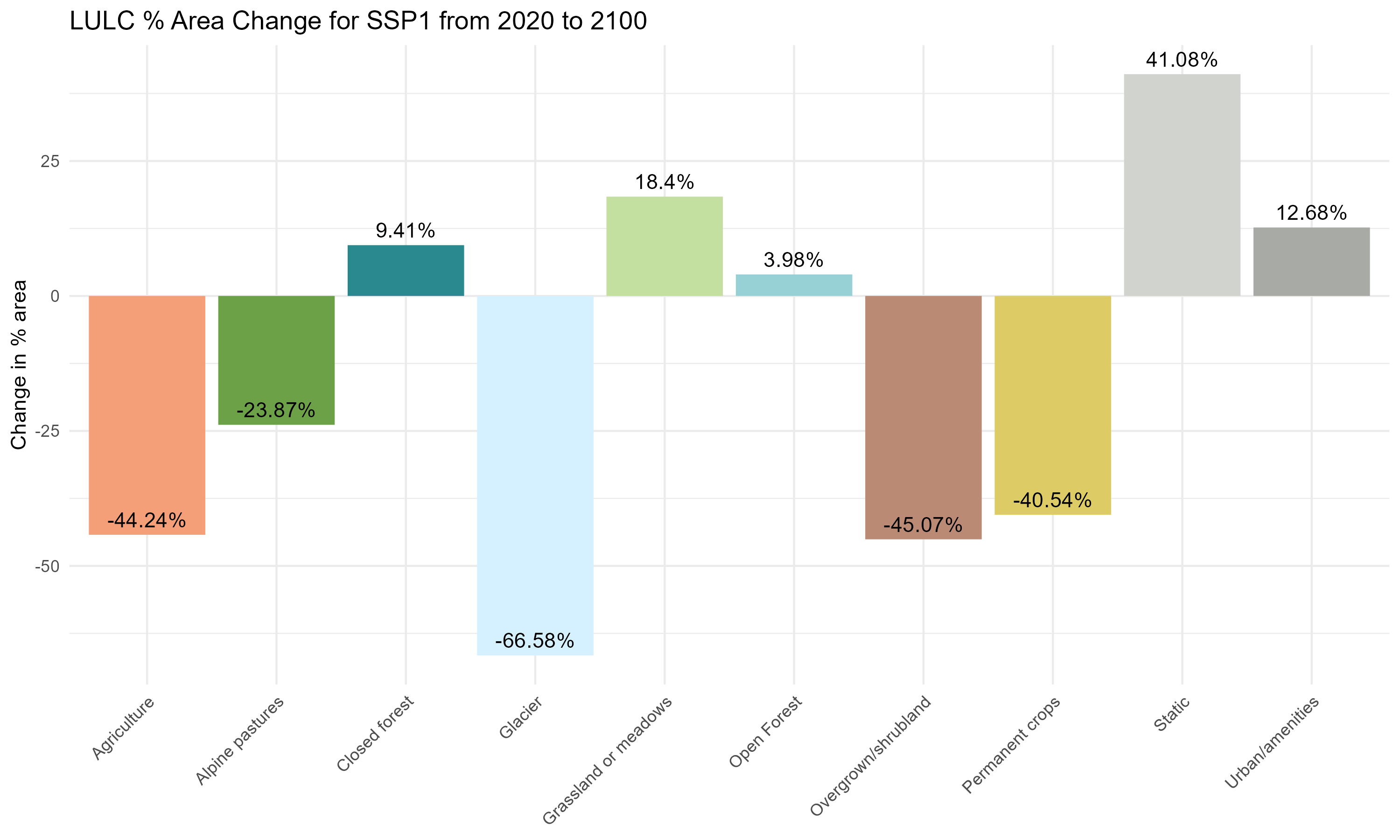
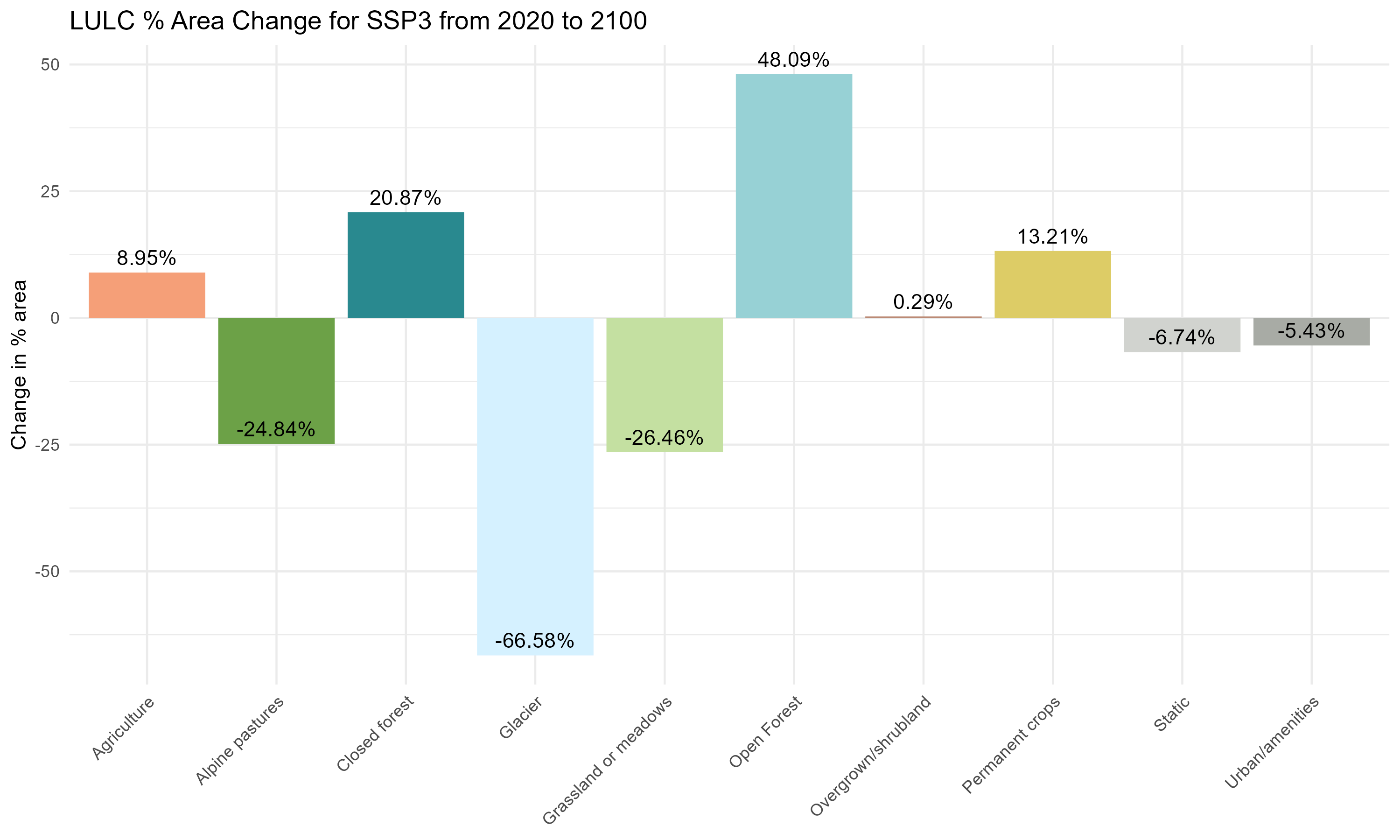
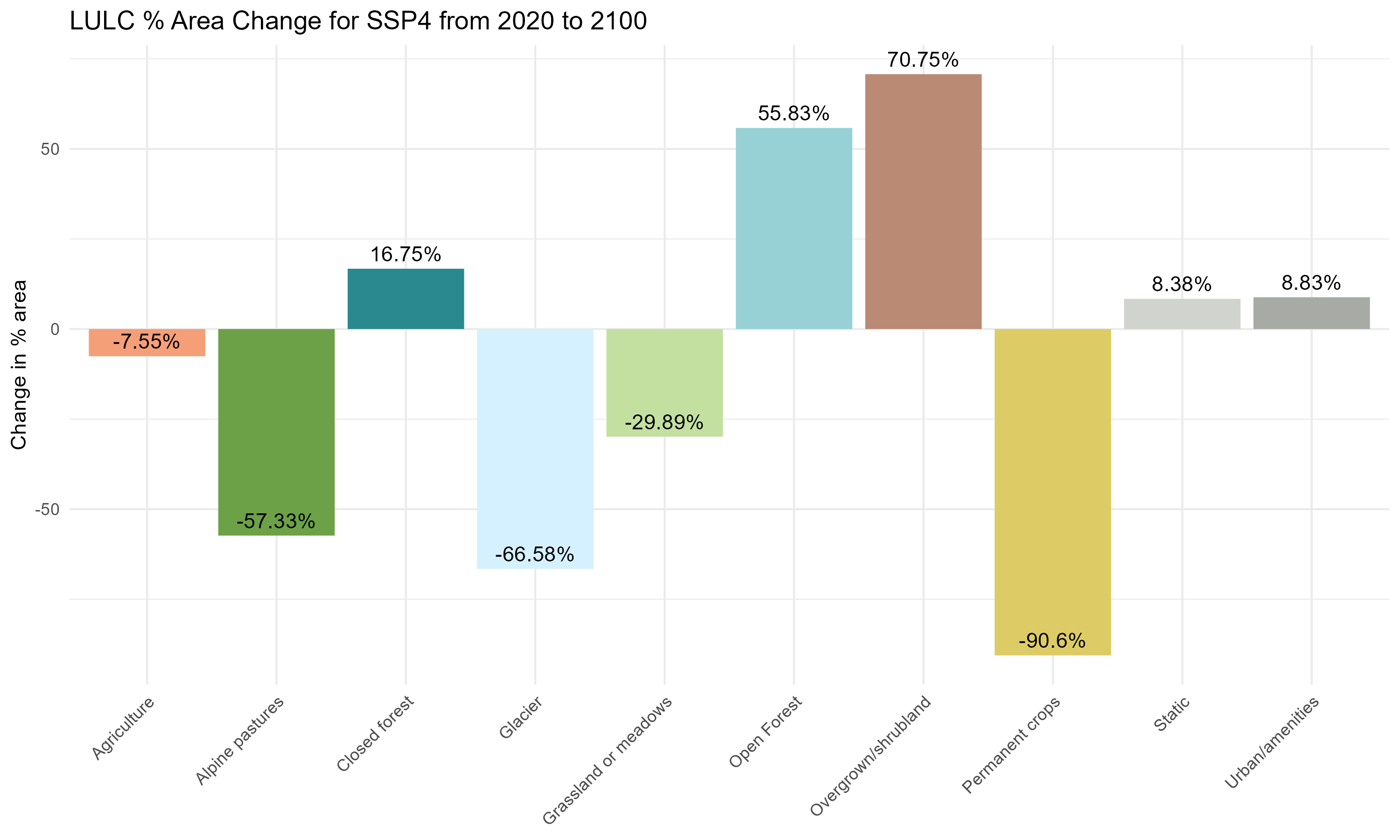
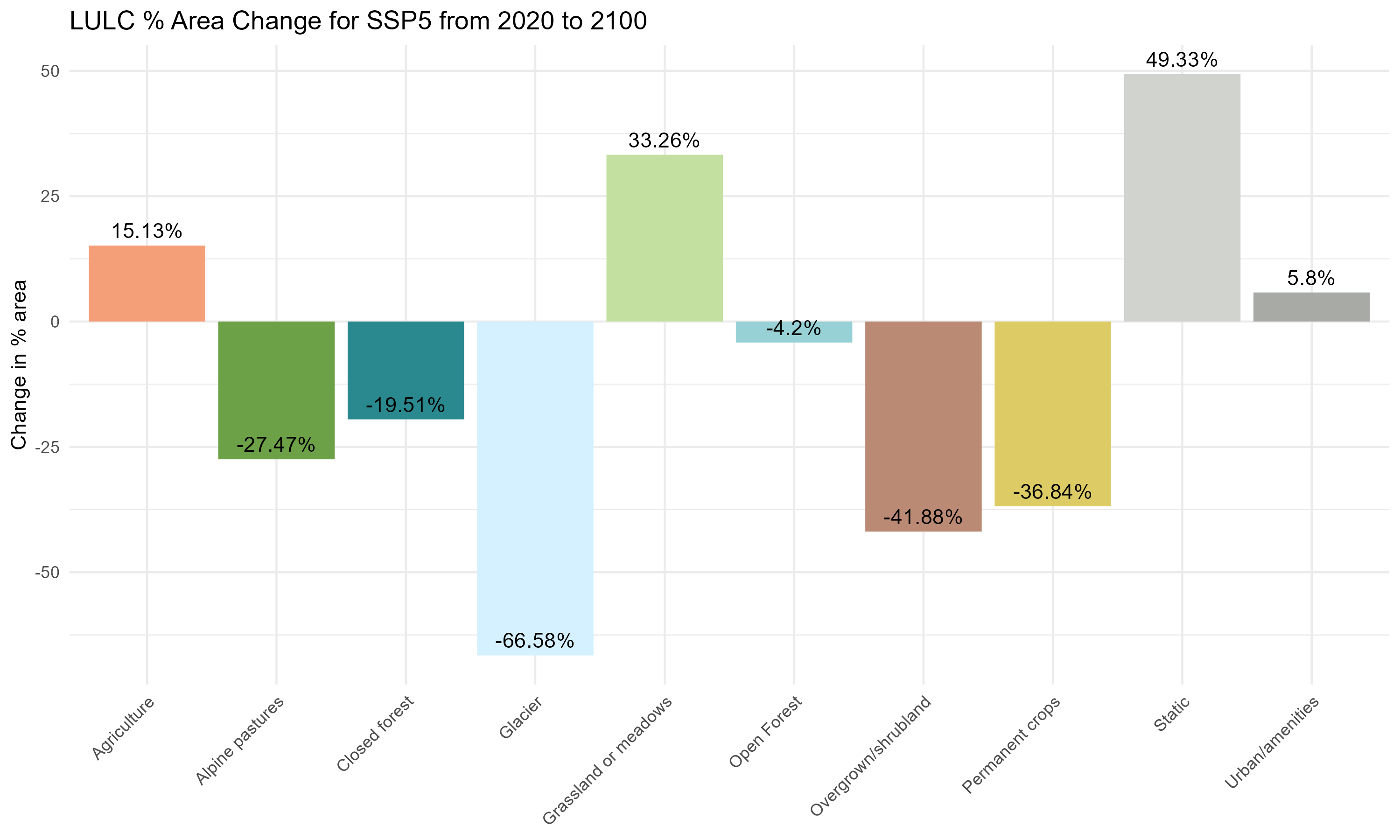
In a supplementary analysis, possible land use was examined for 10 land use classes in relation to the various SSP-CH. For this purpose, we used the Evoland model developed at ETH Zurich.[1] In the Evoland model, land use in Switzerland is represented as cells within a grid, with a grid resolution of 100m*100m. A distinction is made between ten superordinate land use classes: Arable land, alpine farming areas, permanent crops, closed forest, open forest, settlement areas, pastures and meadows, scrub areas, glaciers and other areas. Water bodies (lakes, rivers) are not explicitly modeled - because we assume that these areas do not change significantly over time.
The transition probabilities from one land use class to another are calculated within the model for different time steps. For this purpose, the area shares of each land use class in the last year of the simulation are first determined using the SSP-CH scenario parameters (target image) and then calculated backwards. Then, taking into account spatial restrictions (including environmental factors, infrastructure, regional conditions and regulations), the local interactions between the cells and the resulting kind of state changes of the state are calculated (INFRAS, PROGNOS, WSL 2026).
The change in land use from 2020 to 2100 is presented in 5-year intervals. The results include raster maps (see example map below), Sankey diagrams and change maps (raster maps with increases and decreases of individual land use classes).
A detailed presentation of the inputs used and the complete results can be found on the project website. https://zenodo.org/records/17108008bzw.doi: https: //doi.org/10.5281/zenodo.17108008.
The following is available:
- Maps of possible land uses for each SSP-CH (2020-2100) - maps
- Maps of possible land use changes for each SSP-CH (2020-2100) - change maps
- Sankey plots of land use changes for each SSP-CH
- Target images of land use change for 10 land use classes (percentage and absolute)
Documentation of the model is available on GitHub (in preparation): https://github.com/blenback/LULCC-CH
[1] The developer of the Evoland model, Benjamin Black, carried out the model calculations as part of the NCCS project on socio-economic scenarios (SSP-CH).